Showing posts with label Book Reviews and Other Ink Stains. Show all posts

Saturday, November 6, 2010

My favorite book--The Giver

I'm going to begin writing my final thesis for my Archetypes on Children's Literature course soon, and since I'm writing on the archetypes of dystopia in Lois Lowery's The Giver series, I thought it was time to tell you about The Giver.  I hope you don't mind that this isn't a formal review, but a love note to my favorite book as a fan. 

The Giver is quite simply my favorite book.  I first read it for the first time in the 6th grade and again in the 7th grade, again in high school, again in college, and had it read to me in Mexico after accidentally overdosing on Advil after my muscles locked up from horse back riding for the first time in my life.  I've flipped through it many more times as well. 

Lowry, in the form of kid's book, creates the best use of dystopia/utopia I've ever come across in literature.  George Orwell's 1984 or Margaret Atwood's A Handmaid's Tale, or Aldus Huxley's Brave New World  or even the short story "The Ones Who Walk Away from Omelas" by Ursula K. Le Guin are explicit situations of dystopia in which no person would ever want to live in those worlds.  The Giver is different.

The world of The Giver is a rather logical conclusion to the wants of society.  Lowry's world is a seductive one, without poverty, without the knowledge of death, without war or rudeness or broken families.  Family units care for one an other and society does well to fed and provide for its citizens.  Upon each citizen's 12th birthday they are assigned a career, based on the volunteering that person has done and their personality traits.  Everyone is content and happy.  Don't be confused that happiness is joy, however.

In return for a life free of debt, crime, illness, and fear the community long ago traded in color, and love, and holidays, and family by birth, and choice.  There is one person who retains knowledge and memories of the world before Sameness, The Receiver.  Upon Jonas' 12th birthday he is selected to become the next Receiver as the current one is retiring.


The old Receiver, whom Jonas calls The Giver seeing that the old man is "giving" Jonas knowledge, is not the quintessential archetype of The Sage as you may believe.  Oh yes, he is old and weathered.  He does provides guidance.  He is in the community to solve problems should one arise due to his wisdom.  But he is apart by choice.  He has a disdain towards the community that Jonas does not understand.  

Jonas begins to receive memories of the past and learns of mountains to sled down (traded away for better land for farming), and sunshine (traded away for controlled weather) and love and Christmas (traded away due to pain of loss).  Jonas becomes agitated with his friends for not knowing what love is.  He feels restricted by knowing a world of joy and sorrow and can't express it to his family unit nor to his community since they chose not to know so they can be content in their pain-free existence. 

He decides to run away.  When the previous Receiver-in-training quit the memories of the past flooded back into the minds of the community.  Jonas hopes that by running away his year's worth of memories will disperse back into the community and they will know what grandparents and love and joy really mean.

He flees.  It takes many weeks, but in the end he finds himself on top of hill with a sled in front of him.  Christmas lights twinkle below. 

When I read the book as a child it was so fucking clear to me how right Jonas was.  I too was agitated at his friends for not understanding.  I too felt the apartness of The Giver.  I could sympathize with the world lacking in death and chaos, but what is a world without love?

As I have gotten older I have seen pain.  I have been hungry when I didn't have the cash for groceries.  I have been freezing and shaking without heat and wishing someone could make it warmer outside.  Christmas is coming and presents I can't afford will need to be bought.  A war has been fought for 9 years now and no one seems to care.  Bodies are piling up, but no weapons of mass destruction have ever been found.  And I have seen death.  I saw my grandmother hooked up to IVs in the hospital with an oxygen mask covering her screams.  My grandpa on my mother's side slowly succumbed to liver cancer and I watched as his skin turned yellow and his words became gibberish.  My father died when I was 18.  Too many surgeries.  The holes in his intestine and bladder were sealed but he didn't take care of himself.  Blood everywhere.  I picked out his dark oak casket on a Monday.  And my future death--that scary question of what comes after if anything?  I wouldn't mind living in a world without these things.

And yet.  And with all of the hungry, death, and pain I've seen and have felt, I wouldn't trade love and holidays and sunshine next to a pool and snowy mountains with a hot cup of tea.  Despite the world, I would still run away with Jonas to Elsewhere. 

There has been much written about the idea of socialism in the book and I would personally dispute it to a point.  Sure, the argument can be clearly made that Jonas' community is socialist but since the solution has little to do with neither political nor economic structures, the argument appears almost mute to me.  What I do see it as it an alert for any political or social structure that requires too much sacrifice. Safety in exchange for privacy, anyone?  

There has also been things written about the use of genders in this community.  Play productions of this book have featured The Giver as being an old woman, for instance.  Perhaps it's not a coincidence that Lowry's next book in the series features a female protagonist. 

Which brings me to the end of this entry, and to honest, the reason I wrote this entry in the first place.  I'm going to be reading the rest of the books in the series for the very first time to gather up proper evidence for my thesis.  I don't really want to.  I want Jonas to remain on that hill, ready to sled down to meet up with a new family and a new life.  That's the funny thing about utopias; we don't have to grow up if we don't want to.  But I guess it's time.    

Wednesday, November 3, 2010

Vote.

"Throw dirt on me/ and grow a wildflower" ~ Lil Wayne.

I'm crushed this day after election day.  My I Voted sticker is on my bathroom counter, sad and losing its glue.  I won't go too much into politics here issue by issue, but I can say, with unequivocal disgust, what an embarrassment it is that only 25% of people in Arizona voted in this election. 

I walked into my house last night, weary from 3.5 hours of sleep due to writing an American Romanticim paper until 4am, waking up at 7:15am to finish up a fiction piece for my Literary Magazines class, left my house by 8am to drive 45 minutes away to vote in my district, then drove back to work an 8 hour day.  I walked through my house door with my work clothes heavy on my skin but my I Voted sticker grinning from my shirt.  

My roommates were sitting together on the couches peering at me like cheap entertainment as I walked up the stairs into the living room.  "You voted?" one of my roommates asked me incredulous.  "Of course I did," I said sharply.  "Why?" he continued in a sarcastic voice to the amusement of the crowd of my roommates.  "Because it's important," I answered matter-of-factly. "To who?" "To me," I answered simply.

I was getting annoyed.   Another one of my roommates said that voting doesn't matter since so many of the issues win by huge majorities.  "Sure," I said, "sometimes some issues are pretty fixed, but not always.  Sometimes it comes down to the wire and every vote does matters."  There was grumbling among things and more snide remarks, but the cynicism wasn't boding well with my sleep-deprived body.  "I'm glad that I voted.  I'm proud of myself."  I walked up the stairs without bothering with anyone's counter-remarks.

An issue everyone in the house cared about lost by 5,500 votes.  Every vote mattered.  Every vote counted.

Monday, November 1, 2010

Meeting novelist Lucy Hawking

At a children’s birthday party several years ago a little boy asked Lucy Hawking’s dad what would happen to him if he fell into a black hole.  Lucy Hawking’s father, of course, is eminent astrophysicist (and arguably the most brilliant scientist since Einstein) Stephen Hawking, and that precocious question has lead to two children’s books about space, with a third coming out next summer.

Lucy Hawking came out to Arizona State last week to talk about her two novels and the direction of space science within children’s literature.

A cute blonde woman with a thick British accent, Hawking talked to her audience as one friend might talk to another over a cup coffee.  Hawking had been working as a journalist in the UK when her son was diagnosed with autism at the age of three.  Along with the other challenges that goes along with autism, Hawking was concerned on how her son would be able to one day understand the principles of science and space.  The question at the birthday party inspired the answer.

Hawking had previously written two short stories, Jaded (2004) and Run for Your Life (2005) and called up her editor with the proposal of a story of a child traveling through space.  They were both surprised that little to no previous literature had been written on the topic and Hawking was soon at work with her father and her father’s colleagues to get a better understanding of different elements of space and how to best describe it to children.

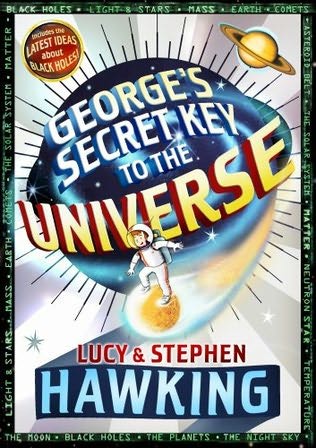
The product was 2007’s George’s Secret Key to the Universe, an adventure tale about a boy called George who finds himself on a space shuttle traveling around the solar system.  Scientists and astronauts around George provide him with answers to how space works.  This book has since been translated in 38 languages in 43 countries. In this first novel Hawking wanted to focus on the creation of stars.

In the follow up novel, George’s Cosmic Treasure Hunt (2009), Hawking wanted to turn her focus onto space travel in general, with an emphasis on shuttles, rockets, and looking for signs of life outside of Earth. 

Hawking told the class that she recently fished her third novel (yet to be named) which will finish George’s adventures with the explanation of The Big Bang.

Hawking joked to the class “You can’t write “the end” at the end of your manuscript but I did.  I just described The Big Bang to kids, I’ll do as I like!”

She was also quite excited to share with us that George’s Secret Key to the Universe is set to become a live-action children’s tv series on the BBC in the upcoming months.

In taking questions from the audience she stated that she has never been challenged by creationists for her works.  She said that the books explain how things in space are, not “explain how they came to be that way.”  The character of Eric is based on her father, and the character of Annie is meant as a female scientist for little girls to look up to.  When I asked her if she felt that children’s books should focus more on fact-based issues such as space rather than wizards or vampires she said “No no, whatever gets children reading.”  While she said that her books are not meant to give importance to one school of thought over another, she does have subtle messages in her books such as unity and conserving the environment.

Hawking will be staying in Arizona for a few weeks as she tours her books around Phoenix classrooms as well as participating in Arizona State University’s Origins Project, where she’ll be researching the origin of evil within the history of literature. 

Sunday, October 31, 2010

Ishmael as a female orphan archetype (from Moby Dick)

Here's my analysis of why Ishmael was the sole survivor of Moby Dick and the sinking of the Pequod.  I'm proud to say I received an A on this essay. 

Abstract

In the final minutes of the sinking Pequod, the representation of Greed and Masculinity, two orphans are thrust into the sea: a bold sea-hawk and a meek man.  Two orphans; only one survivor of the fates.  Ishmael lives to tell his tell not because he is courageous like the bird, or a well-oiled corporation like his ship; he survives the wreak because he faithfully adheres to his role as an Orphan archetype, or more specially, his embodiment of the female orphan archetype carries him to safety

Essay: 

Female Orphan at Sea

Awash in the violent sea of sin, the Pequod, the archetypal Home, Greed, and Masculinity sinks to its death.  Two orphans are thrust into the sea: a bold sea-hawk and a meek man.  Two orphans; only one survivor of the fates.  Ishmael lives to tell his tell not because he is courageous like the bird, or a well-oiled corporation like his ship; he survives the wreak because he faithfully adheres to his role as an Orphan archetype, or more specially, his embodiment of the female orphan archetype carries him to safety.

The Orphan archetype has been played out in the centuries hundreds of times over, as a young orphan starts out with a cruel family or an absent family, and seeks out adventure as well as a replacement familial unit. What makes Ishmael unique, however, is that his Orphan’s journey is more archetypal to a female Orphan versus a male Orphan.  In most classic tales, the orphan finds him or herself on journey for glory, and once tested by evil, return home.  However, the boys return as wealthy heroes or die as martyrs, whereas the girls return more or less to the same state as when they first began, with little more than some knowledge of the world and a story to their name.  Ishmael may not even have a name to give.

From the trepid start Ishmael forges himself out as the archetypal Orphan.  “Call me Ishmael (18),” he asks his listeners.   It is almost to imply that this is not his real name, for no one throughout the novel ever speaks his name directly.  While it seems plausible that one would change his or her name for matters of privacy or issues of shame, it appears that ‘Ishmael’ is a moniker he conceived for himself for its cemented history of being a name for an outcast, an orphan to the world.  He wants to be seen as The Orphan figure from the start so his listeners may garner ethos as Ishmael as a storyteller and unlikely survivor. 

Sunday, October 24, 2010

Vajazzle Dazzle (vajazzle article)

"Vajazzle dazzle"
[This is my trend article on vajazzling.  I'm proud to say I got an A on this article]

When Ashley goes out with the girls on Friday night she’ll double-check her glittering earrings, her sparkling necklaces, her shiny bracelets, and her newly gemmed sunburst currently exploding on her “vayjayjay”. 

It’s going to be a bright weekend, indeed.

What is vajazzling?  It’s the decoration of the “naughty bits” region of women with gems in various patterns, and it’s been making quite a glittering splash in popularity this year.  These gems have adhesive glue which allows the crystals to remain on the skin for 5-10 days and can be placed either on top of the pelvic bone or on the nether lips themselves. 

Call the vajazzling look the “pink disco ball”, “labia sprinkles”, or my personal favorite, “va-dazzling”, vajazzling has been making 2010 a very shiny year.

New York City’s Completely Bare Spa has taken credit for originating vajazzling, as it has offered the Brazilian Wax vajazzle combination deal for a few short years.  This past March Jennifer Love Hewitt went on air with George Lopez talking about her own vajazzling, and the trend has gained popularity every since. 

Vajazzling is often done at salon, but vajazzle take-home kits are now available.  Vajazzle Kits™ was established in early 2010 by Australian businesswoman, Susan Butler, who watched Hewitt’s interview and decided to market the crystals on a global scale.  Vajazzling kits can now be found in The United States, The United Kingdom, Australia, New Zealand, and Canada.

Vajazzling Kits™ and knock-off kits are available at adult shops or, for the Martha Stewart types, any general store with gemmed temporary tattoos.  These kits usually run for about $15.  Full vajazzling services, from the wax to the dazz can run about $75-$115 depending on the salon.

While vajazzling itself is new, it is a part of a larger trend of wide-ranging female grooming.  In some Middle Eastern countries female pubic grooming has been around for centuries, but in the United States, the trend of bikini waxing and later full Brazilian waxing has gained popularity since the 1940s when bikinis and underwear began to shrink in size, exposing the hair.  In the 1990s it became the norm in pornography to feature Brazilian-waxed girls and the full Brazilian movement has taken off ever since.

Oddly enough, there aren’t many hard statistics on vajazzling, let alone numbers on shaving, trimming, and waxing.  Dr. Debby Herbenick , a sexual health educator at The Kinsey Institute, Associate Director of the Center for Sexual Health Promotion at Indiana University and author of Because It Feels Good: A Woman's Guide to Sexual Pleasure and Satisfaction notes with frustration on kinseyconfidential.com that, “There have only been a handful of studies on the topic and most have used convenience samples that don’t give us valid or reliable information about American women on the whole.”

No major institute, from the Kinsey Institute to any American university has done any deep research into this hairy issue.  While forums and articles on waxing are popular in female magazines, no sturdy polls can be found.

There are a few websites that conduct their own independent polls, such as misterpoll.com which stated that out of 231 anonymous online voters 64% responded that they shave all of their pubic hair, 12% of participates said that they shave 90-100% of all of their hair, and only 4% voted that they don’t shave at all.  Scientificamerican.com cited a 2008 issue of Sex Roles where Flinders University psychologists Marika Tiggemann and Suzanna Hodgson, for example, found that 76% of a sample of 235 female undergraduate students from Australia reported ever having removed their pubic hair. Of course, turn on any tv show or pick up any female magazine and you’ll find waxing jokes and tips galore. 

Considering that “Brazilian wax salon” rips up 104,048 results on Google maps, and typing in “vajazzle” to Yahoo! Search puckers in 929,000 results, clearly there is an untapped market of research on “Chewbacca”-fearing women.

Ashley heard about vajazzling about a year ago on the late night series Real Sex on HBO.  Last week she vajazzled her sunburst via a home kit. “I wanted to try it myself before I got it done professionally,” she said. “I like it a lot. It’s something new.  I don’t think I’d vajazzle all the time, but for special occasions like Halloween, or fun nights out with the girls.  It’s for me.  I think body decoration is fun; a way to express yourself.” 

Ashley joked, “I would bully all of my friends to vajazzle. This sunburst is just the beginning.  Next time I’m going to have the whole solar system on my vagina.”     

Ashley isn’t the only woman raving about vajazzling.  Vajazzling has been mentioned on Fox News, Salon.com, and it’s on the September cover of Cosmopolitan Magazine.

“I can’t wait to get vajazzled!” said Elizabeth.  Elizabeth heard of vajazzling from her friends and is hoping to set an appointment sometime next week. She wants to go all out for her first design.  “I want to my vagina to be as pretty as possible.  If we’re going to wax it, we might as well get it gemmed.”  She has a few ideas of what she wants to get gemmed south of her geography, including something for Breast Cancer Awareness Month, but her current top choice is “something extreme like a massive butterfly that’s spreading its wings on my vagina.  My vagina makes a statement.”

Men seems to be split on the topic of vajazzling.  Some find the idea erotic, others find it gratuitous.

Thedoctorweighsin.com quoted Ian Kerner, PhD, author of She Comes First, the Thinking Man’s Guide to Pleasuring a Woman, in saying, “Most men don’t pick up on minutiae like that, they’re just excited to have access to the area.”

Joshua has his own thoughts on vajazzling.  “I think personally it’s a little much; it’s a little bright,” he said. “Some landscaping would suffice.  As for jewelry, it would make me feel uncomfortable—like I need to be up to par with the sparkle.” 

When I mentioned to Josh that “penazzling”, the decoration of the penis with gem stones, is now available in salons, Josh responded with a hearty laugh.

Vajazzle crystals do not need to be placed near the pubic area exclusively.  Some women chose to place the crystals on their arms, backs, or stomachs.  As long as the skin is smooth from hair, vajazzling may take place.

There is no age limit for vajazzling.  The only requirement is full wax or shave, which women of all ages participate in, though body decoration in general is more common in younger generations.  Pew Research Center has found that about 54% of Gen Nexters, Americans in the age range of 18-25, have done one or more of the following: gotten a tattoo, dyed their hair an untraditional color, or had a body piercing in a place other than their ear lobe.

Rio Wax Salon in Phoenix has since seen the vajazzle business grow since the Hewitt interview.  Salon worker Catherine (who would not issue a last name) stated that “Vajazzling is a very popular service.  Quite popular with all ages.”

There is little danger associated with vajazzling, aside from possible allergic reactions to the glue, and the ripping-your-skin-raw feel of a getting a professional Brazilian.  However some men I’ve talked to have expressed trepidation in swallowing a gem by mistake. 

Patrick, for one, isn’t worried about this possibility.

“If a girl puts in the time to vajazzle, I’d appreciate that and show her that,” he said.  “I’d go to town on her. Yes, definitely go to town.”

Not all women, however, or keen on vajazzling.

“I think honesty it’s sad,” said Alyssa. “I don’t see why women have to go to such extremes to please men.  And what the hell kind of fetishes for you have If you vajazzle for yourself?”  Alyssa sees vajazzle as another type of self-deprecation. “I think it’s sad all these people put all this time into personal appearance.  We’re in a world where personal aesthetic is more important then what’s inside.”

Will vajzzling last?  It’s too new to tell.  However, vajazzling belongs in a larger menagerie of shaving, trimming, waxing, piercing, stenciling, dying, tattooing, and other procedures of the “pink lady”.  Josh for one wonders what will come next for those who dazz their vag.

“I mean, why not throw in a disco ball or a strobe light?  I mean, if you’re really trying to go all out…maybe a promoter?”

Most friends do lunch.  In honor of this article, my friends and I vajazzled. Perhaps in a statistic of its own, all of my twentysomething friends and I were already bare to begin with for a home kit.

I’ll be honest, the gems are quite pretty and they were easy to place on top of the skin, but I don’t find them to be particularly interesting.  However, as a proper journalist, I decided to webcam my out-of-state boyfriend for a reactionary response. Let’s just say I got a visible thumbs-up.

If all it takes is a few gem stones to rejuvenate my relationship of four years and have a fun conversation with the girls, I for one don’t mind the sparkle.

Maybe it’s time to add a little dazzle to your weekend too?


Sources:

1.)    Block, Jenny. “Fox on Sex: Vagazzling: Do you dare decorate ‘Down There?’”. foxnews.com. FOX News, np. 19 Apr. 2010.  Web. 30 Sep. 2010.  

2.) Williams, Mary Elizabeth.  “The secrets of “vajazzling”: Lady parts: now with    more sparkle”.  salon.com. Salon, np.  15 Jan. 2010.  Web.  30 Sep 2010. 

3.)    Pew Research Center.  (2010). 36%--Tattooed Gen Nexters [Data file].  Retrieved from http://pewresearch.org/databank/dailynumber/?NumberID=237.

4.)    Patrick.  Personal interview 30. Sept 2010.

5.)     Elizabeth. Personal interview. 5 Oct 2010

6.)    Catherine [Rio Wax Salon worker]. Personal interview. 6 Oct 2010.

7.)     Ashley. Personal interview. 9 Oct. 2010

8.)    Joshua.  Personal interview. 12 Oct. 2010.

9.)    Alyssa.  Personal interview. 12. 0ct. 2010.

10.) Mister Poll. (2010). Pubic hair method, ect [data file].  Retrieved from http://www.misterpoll.com/polls/450027/results

11.) Herbenich (M.P.H., Ph.D), Debby. “Q&A: Young American Women: Only Ones Who Shave Their Pubic Area?”.  kinseyconfidential.org. Kinsey Confidential. 8 Feb 2010. Web. 11 Oct 2010.

12.) Bering, Jesse. “A bushel of facts about the uniqueness of human pubic hair.”. scientificamerican.com. Scientific American. 1 Mar 2010. Web. 12 Oct 2010.

13.) Salber, Patricia.  “Want to look pretty “down there?”. thedoctorisin.com.  The Doctor Is In.  12 July 2010.  Web. 12 Oct 2010.

Friday, October 8, 2010

Current wordplay in Rap

Most people are surprised that I'm in love with hip-hop, but find me a genre with better wordplay these days.  Here are a few of my favorite lyrics currently. Some are a bit old, but they're in heavy rotation in my iPod.

1.) Eminem's part in "No Love" feat Lil Wayne

"Man, get these cocksuckers off stage
Where the fuck is Kayne when you need him?
Snatch the mic from them
Bitch, Imma let you finish in a minute"

This a tightly wound verse that incorporates the event of Kayne taking the mic from Taylor Swift at the MTV Music Awards, and twisting Kayne's quotes to fit Em's end game of dissing other rappers to shut up and get off the stage.

2.) same song, Eminem's part a little later on

"When I'm not even at my harshest
You can still get roasted because Marsh is not mellow"

This is a clever wordplay on his real name, Marshall.

3.) Young Buck's part in 50 Cent's "Hate it or Love it" (G-unit remix)

"You know I'm still nice wit my cook game
Look mayn
It's a hood thang
That's why I'm loved in Brooklyn

Let me what a thug bout, going to die
I took the bullets outta 50
Put em in my fou. five"

What I love about rap is the ability to make totally unlike words rhyme.  For instance "game", "thing", and "Brooklyn" aren't exactly like sounding cousins, but with the right accent they can run together like poetry.   And let me just say, "I took the bullets outta 50 and put them in my .45" is one of the best rap lines I've ever heard.  In case you don't know 50 Cent was shot nine times in his life and survived.  This line has such imagery, and is both a wink at 50 (the song's main rapper) and truly creative way to be street and imaginative. 

4.) Kayne's part in "Forever" with Drake, Lil Wayne, and Eminem

"You'd think I ran the world like Michelle's husband"

Alright, I'm a Lit major so allusions of any kind are like candy to me. Now, I'm sure 99.9% of the country knows who Michelle Obama is, but to allude to the president by his wife's name alone, shows the popularity Michelle Obama has in this country.  Do you think anyone rapped about Laura Bush?  Exactly. 

5.) Drake's part in "Fancy" with T.I. and Swizz Beats

"I've always liked my women book and street smart.
Long as they got a little class like half dazed
And confidence to overlook past my past ways
Time heals all
And heels hurt to walk in,
But they go with the clutch you carry your lip gloss in"

Love the wordplay of past/past and heal/heel.  It's done so smooth too, like he's just sitting there playing with words and meanings.

Good stuff.  Night, folks!

Sunday, September 19, 2010

Emerson essay

Here's my Emerson essay. Prompt:  use Frederic Edwin Church's painting Heart of the Andes as a jumping board for Emerson's thoughts on nature in his essay "Nature" or other essays. I received a B+ on the paper, since my paper was under the page limit.

My abstract: Both Emerson and Church show that nature is but an illusion to an average man.  An educated man, one that is skilled in lessening Reason to see Beauty, will see images of nature whether in nature or on canvas, and in his own mind will translate these sights into the divinity that nature encapsulates.    


My essay:

Finding Grace

Emerson’s man may not find truth in nature, but with open eyes he may see the landscape of God’s grace.  Emerson’s essay “Nature” is littered with references to inaccessible points of beauty—inaccessible not for lack of availability, but impermeable due to an educated man’s overly complex Reason.  A single innocent child, one without developed reason in his head, has a better chance at seeing the grace in nature than a mob of men. However, Emerson argues that a truly educated man with an open mind to may find nature’s “kindred impression”.   A truly educated man will translate the images of beauty and find not their secrets, but their divine grace.

Emerson is dismissive of most men, for, “To speak truly, few adult persons can see nature (5).”  On the contrary, Federic Edwin Church ushered in thousands of these adult persons to see his version of nature.   The Heart of the Andes was the most widely seen painting in Church’s era, and it’s no accident that his painting depicts a far away land while it was stationed squarely in America.  Church offers up a hyperreal depiction of nature, one that audiences could view in a dark room and be transported in their minds to a land where fairy tales might reside.  His vision of nature is a nature that few of the viewers would ever attempt to travel in person to see, though of course, his depiction of nature is not of a real singular place.  This exhibit of nature was a commodity; a chance to travel without leaving one’s neighborhood.  Emerson might have believe that these thousands of customers were not truly experiencing nature for what nature can be for, “Nature never [becomes] a toy to a wise spirit (5)”.   An Emersonian educated viewer of The Heart of The Andes would not see it as a representation of land and trees and lakes, but would experience the painting with a sort of reverence of nature’s divine spirit.

Eat Pray Love movie review

When you’re watching a movie and find yourself realizing that you enjoy the ravioli’s personality better than the lead actor’s, you know you have a problem. 

Julia Roberts does all she can to glow and smile, and crunch up her forehead in desperation when called for, but she can’t save this movie from it self-indulgence.

The story of Elizabeth (Liz) Gilbert has been talked about in book clubs since 2004’s Eat Pray Love first hit the best-seller’s list.  In the book, Liz comes across as a humbled friend with a self-deprecating wit and real passion for travel.  In the movie, Liz is a fun but utterly spoiled brat enjoying a nice vacation.

The movie opens with a gorgeous shot of Roberts pedaling through the lush scenery of Bali.  Cut to New York a few years earlier and a more drab, but no less fabulous Roberts enjoying the middle-rich life of a published travel writer on her second novel, a beautiful husband, funny and successful friends, not to mention a trendy apartment.

So…what is her plight exactly?  She has everything but feels trapped.  This theme has been on the big screen lately with “chronically dissatisfied” Cristina from Vicky Cristina Barcelona (Scarlet Johansson), and desperately unhappy with the American dream April Wheeler from Revolutionary Road (Kate Winslet).  So why did Johansson and Winselt do so much better in the same topic?

Much of the movie’s faults begin in the first opening minutes.  We never truly understand what’s eating Gilbert, Liz.  She suggests that since she “was fifteen I was either in a relationship with a man or breaking up with one.  I haven’t had two weeks to deal with myself.”  So why does she fall into a steamy relationship with young actor (James Franco) about 15 minutes into the movie?  It’s a mid-life crisis calling itself a journey. 

Look, I don’t want to rain on a pretty girl’s parade, but if I’m watching a movie about a person running away from something so profound she needs to leave the country for a year I’d like to at least understand why she’s running.

However, I am glad that she ran to Italy first.  The rich Italian food and the splendor of the ancient city are shot with such passion it’s nearly pornographic.  In Italy, Liz finds friends, and wine, and quiet solitude of all things beautiful.  Roberts is never as warmly magnetic as she is while setting a crisp asparagus on her plate in this city of fairy tales.  We wish we could join her.  Then again, if we were there she’d probably ignore us.  Much happens in the lives of her friends in Italy but Liz is never shown being a part of it.  She is the center of her own universe.

Wednesday, July 21, 2010

Book Review: Into Thin Air

Standing on the summit of Mount Everest, oxygen-starved Jon Krakauer opens Into Thin Air with a tone of small pride and greater desperation.  Krakauer writes in a tone of fear for his own survival at the top of the world, and trails off that he had no idea that that day in May 1996 would be tragic for so many lives involved.  It’s a powerful scene that cuts right into the action and suspense of the controversial event that happened so many years ago on top of the most dangerous mountains on Earth. 

The May 1996 Disaster and the year itself is one of the deadliest on record for the mountain.  Krakauer happened to be on one of the teams that were affected that May, giving him an usual vantage point of journalism, as well as guilt from his possible involvement with adding to some of the deaths of those eight climbers.

The book’s chapters start with dark black and white art pieces of Everest as well as a date and height of the action.  Following this opening chapter is a briefer chapter about the history of Mount Everest and how it got its name and measurements.  This is one of Krakauer’s best writing tricks: nothing is a simple event but a full context of how this person or that person ended up in the cross-hairs of circumstances.    

Things started going downhill for Into Thin Air soon after that, however.  There was a certain tone of Krakauer’s that I couldn’t quite place.  This tone cuts in and out as sometimes he is distinctly emotionally removed as his lists the prices of a quest up Everest and the reputation of the climbers.  However, by mid-book this tone is back and fully realized when he quotes a peer climber who was interviewed after the disastrous trip to say, yes, having a journalist along for the trip might have influenced people to act in ways they wouldn’t if they weren’t being recorded.  Perhaps he, a member of the press and possible publicity he represented, was the reason the guides did not turn their clients back at 2pm whether they reached the summit or not, exposing several clients to freezing temperatures for far longer than recommended, and trapping them onto of Everest during a powerful and deadly storm.

It was then that I realized that this unsettling tone is one of an apology.  Krakauer writes as if the audience has already heard about the story and this is his confession for the events on the mountain. However, this tone is often broken up by journalistic professionalism shedding light on the commercialization of the mountain and the background of each of his climbing peers.  

It is this mixed message tone that is Krakauer’s greatest flaw in Into Thin Air.  As the story progresses from Base 1 to Base 2 he tries to describe the characters as a non-involved journalist, but then will descend into lightly judging the inexperienced climbers for being on the mountain in the first place, only to take back his comments into euphemisms as a sort of reverence to the deceased.  He can’t make up his mind if this is a non-fiction journalistic account of the disaster, if it’s an apology for his part in it, or if it’s an essay exploring why people climb Everest in the first place despite dangers.  The entire book is gripping but it’s also scattered.

While Krakauer does open each chapter with a passages about Everest from varies sources through the ages, beyond the second chapter he only sprinkles historical facts throughout the rest of the book.  It feels inconsistent as to the context of climbing the mountain, especially after reading his other works and knowing how thorough he is when explaining tragic circumstances of a place and time.

He also takes great pains in trying to give honor to the deceased by peppering the novel with dozens of names.  In fact, there is a 7-page list of climbers at the beginning of the book.  Unfortunately there are simply too many characters to remember and by consequence, the emotion connection to each of them is weakened. 

It is his summary of the fellow climbers however that has received the most amount of press for Into Thin Air.  He describes at length the actions of guide Anatoli Boukreev who left behind much of the climbing party on top of the mountain that fateful day.  Krakauer is highly scornful of this, and wonders at length how events would have been different if an extra guide would have stayed near the summit.  While Krakauer later explains that Boukreev risked his own life by leaving the safety of base camp to search for survivers (and rescued a few of them).  Boukreev later wrote his own account of the disaster, slamming Krakauer’s villainous depiction.

What’s interesting is that Krakauer is not as harsh on his own guide, Robert Hall and his decision to not turn back his clients at the 2pm deadline, but to carry on despite the risks.  It’s also disturbing to read Krakauer’s picky choosing of whose deaths he feels personally responsible in causing.  At times it appears that Krakauer the journalist blames himself for most of the deaths, then at times he appears the most responsible for Andrew Harris, whose death still plays for a bit of an mystery for Krakauer and others, but none is more tragic then the Krakauer mild view of the death of Yasuko Namaba.  Krakauer explains that some inevitable death is more obvious then others, but through a series of events it is more and more obvious that the 90-pound woman could have been carried back to Base and saved.  Krakauer has remorse but not nearly enough considering he was so close to her body at the time.

Into Thin Air is a suspenseful and is haunting for both the reader and the author.  In a near twenty-page epilogue Krakauer continues to plays devil’s advocate for the responsibility of tragic events.  Is it journalism’s fault?  Is it commercialization?  Is it zealous guides hoping for a better reputation?  Krakauer can’t seem to decide. 

Perhaps it is unrealistic for one to make firm assertions after witnessing horror first-hand.  But to be indecisive between removed emotions versus heartfelt remorse is too irresponsible on Krakauer’s part of both a journalist, a survivor, and a novelist. It’s been over a decade since the first edition: it’s time for  Krakauer to stop hiding behind his own mountain of ambivalence .     

Monday, July 12, 2010

Review: Kings of Leon concert

Like most people I hadn't heard of Kings of Leon until late 2008 with their hit single "Sex on Fire".  At first I thought it was something of the late 80s era of Journey or Bon Jovi, and was confused on why it was playing on virtually every station that winter.  When a friend informed me that Kings of Leon was a "new" band and that "Sex on Fire" was about "/The head while I'm driving/" I was more than a little intrigued at who this band was.

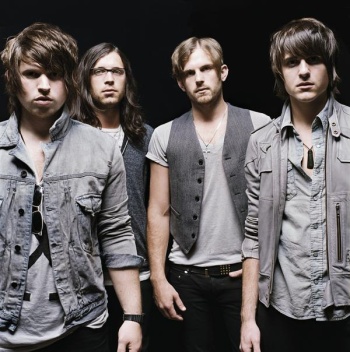
Kings of Leon formed in Nashville, Tennessee back in 1999 with brothers Caleb Followill, Nathan Followill, Jared Followill, and cousin Matthew Followill, with the influence of southern rock being found in the gruff of lead singer Caleb's voice as well as the simple guitar riffs. At their best, the band sounds like the epic stadium ballads of U2 and at their worst, sound like listless and dull Coldplay, only with a harder edge and less joy. Needless to say, they're on repeat on my iPod for driving solo or homework or dinner parties, but I was rather hesitant on how well they could play an energized show in Chula Vista, California on Friday night.

As I walked up to my lawn seats I was worried that The Cricket Wireless Amphitheater, with its cheap plastic appeal and a short walk to a water slide park, would affect a rock performance.  I didn't foresee the smashing of guitars, that was for sure.  Looking around I'd say a good 90% of the crowd were well dressed Caucasian thirtysomethings who appeared to be more excited about drinking beers with pals than watching the band play.  Regardless, I was bubbling with excitement as the lights dimmed and Kings of Leon walked on stage to much applause.  

They opened with "Crawl", a midtempo song which showcases Caleb Followill's grit of voice and lyrics about the crucified USA and the abused population.  Kings of Leon often have high-charged lyrics about good things lost, late nights, and hope, though frequently their melodies overpower their lyrics, resulting in more of a mood, a sort of aura of a smoky bar in the dead of night, rather than a message. 

The band slipped in a few songs in a row without pause, including fan favorite "My Party" about the coming of age and a girl who finally notices him.  As the happy crowd, at nearly full capacity in the 20,000 seating for the Amphitheater, sang along with their beers in tow it was obvious that this band has a loyal following, though definitely not to any loud decibel as one might expect at a rock show.  
The band was on point with "Sex on Fire", which got a healthy round of applause despite the lifeless, near obligatory attitude of the band when it started, and "Manhattan" was equally as enjoyable with its intricate bass sound and upbeat lyrics like "We're gonna fuel the fire/ gonna to stoke it up/ We're gonna sip this wine/ and pass the cup/ who needs avenues/ who needs reservoirs/going to show this town/ how to kiss these stars".

While Kings of Leon played their songs flawlessly, there was no momentum by the band, no walking around the stage, no storytelling of the songs or the tour, no enthusiasm before, during, or after each song--as if each song was mandatory and unloved.  I couldn't help but wonder if a teenager on vicodin could have done a more stimulating performance on Rock Band.  

It was apparent that the most popular songs were the ones from their latest album Only By The Night, with favorites like "Be Somebody" and "On Call" sparking some singing along and dancing in the crowd. Kings of Leon addressed the audience a handful of times thanking everyone for coming out, but it seemed begrudgingly.  Some of the best concerts I've been to have had zero to none special effects, but Kings of Leon's special effects of the black-on-white video feed on the Jumbo Trone and the occasional lights panning over the crowd seemed more like cheap tricks than fun playful gimmicks.

At least the music was good.  Despite the morose stance of the band, songs like "Notion" with its good vibes and rock-heavy sound of loud guitar, weepy keys, and that hard gravel voice inspired some swaying and emotion from the crowd--myself included.

Kings of Leon came back for their encore playing their massive hit "Use Somebody", which sounded just as beautifully epic in person as it does in an iPod, though you couldn't get that impression by looking at the passionless band playing the song. In the end, perhaps that's the issue with Kings of Leon: their music is epic but the band is meek.   I want a band that puts every damn emotion into a rock song.  I want a band that talks to the crowd and taunts the rules of the amphitheater.  I want a band that understands that a rock show, even a mild quiet rock show, deserves some grit and boast.  I should have gone to Coldplay instead

Thursday, July 1, 2010

22 books to read before I'm 23

Here's a little secret: English Literature majors hate reading.  Let me re-phrase that a sentence a bit better.  English Literature majors, between the hours of 1am and 5am when caffeine is winning over their sleep cycles and, in trepidation for the essay to come, are struggling to finish yet another chapter of Moby Dick, or re-reading Paradise Lost and A Midsummer's Night Dream for the upteenth time, or trying to figure out what the hell Faulkner is yapping about, is when they hate the required reading canon the most because it burns them out of their desire to read and more or less dissipates the pleasure right out of reading.  There is a cure for this: summer vacation.

We English Lit students absolutely love vacation because it allots the time to finally read books we want to read, versus are graded to read.  Over the past few months I've once again acquired stacks of unread books sitting on my desk like mountain peaks, and I've been itching to read them all at last.  So here's my latest 22 List:

22 Books to Read Before I'm 23
  1. Into Thin Air  -- Jon Krakauer  (7/2/2010)
  2. Eating The Dinosaur-- Chuck Klosterman (7/19/2010)
  3. Are You There, Vodka? It's Me, Chelsea -- Chelsea Handler 
  4. Food Rules --Michael Pollen 
  5. Their Eyes Were Watching God -- Zora Neale Hurston
  6. Oil --Upton Sinclair
  7. A Walk In The Woods -- Bill Bryson 
  8. Monkeyluv: And Other Essays About Our Lives as Animals -- Dr. Robert M. Sapolsky
  9. The Particular Sadness of Lemon Cake --Aimee Bender  
  10. This Is Your Brain On Music -- Daniel Levitin
  11. The Great Gatsby -- F. Scott Fitzgerald [technically I've read this before, but it's been awhile]
  12. War --Sebastian Junger
  13. Saturday Night --Susan Orlean 
  14. Cannery Row-- John Steinbeck
  15. Publish This Book -- Stephen Markley
  16. some sort of J.K. Rowling/Stephanie Myer book.  Fun and breezy but wholly addicting
  17. Fargo Rock City -- Chuck Klosterman
  18. Rip Van Winkle -- Washington Irving
  19. a book of poetry by a poet I haven't read before.  Preferable born in the last 100 years
  20. Pride and Prejudice and Zombies -- Seth Grahame-Smith
  21. a history book of some kind.
  22. Zen and Motorcycle Maintenance -- Neenah Ellis
Wish me luck!  And check back periodically, for I'll be crossing off the books as I finish them.

*this list is a part of the on-going serial: The 22 Series

Sunday, May 30, 2010

Review: Sex and the City 2

When you see hundreds of women lined up at the box office this weekend in flashy dresses slightly loopy from too many cocktails, trust me, they're not in line to see The Prince of Persia.

This weekend marks the opening of Sex and the City 2, the sequel to the massive financial and cultural event that was Sex and the City the movie.  It's been two years, the girls are back, and it is a delight to have them.  

To review this film is to understand what it's like to view it in theaters, for the moment the lights in the theater get dim and that theme song starts and hundreds of girls with their best friends, wearing their best dresses start to applaud and laugh excitedly it becomes abundantly clear that this movie could F quality and it truly wouldn't matter .  I went on Wednesday night and a little past midnight these hundreds of girls and I knew that we will be here until a little before 3am but we were there in droves anyway for one reason and one reason only: the chance to hang out with all of our collective best friends of 6 seasons and now 2 movies: Carrie, Charlotte, Samantha, and Miranda.

The movie itself?  Borderline ridiculous, always fabulous.

Major spoilers ahead:

Sunday, April 25, 2010

Postmodernism: cheap trick or brilliant twist?

My friend Brittany and I were on campus the other night for an ASU actors performance of "The Death and Life of Sherlock Holmes". The play was B quality. The actors were earnest in their impassioned readings, the bendable set was absolutely incredible with the ability to create hidden platforms and rooms, the use of screens was innovative to create mood and ghost effects, and the ingenious lightening was utilized for displaying snakes and trains and characters running as well signals to the audience (by way of projected architecture) of new locations.

The script though was convoluted at best. It took pieces from "The Adventure of the Speckled Band", "The Adventures of the Dancing Men", and allusions to another story involving psychics and gypsies. I read every single Sherlock Holmes story when I was a kid and ate up the sense of mystery and whodunit with a sense of wonder like most people who've read the collections. But that's just it. I've read the Sir Conan Doyle stories so I knew what the hell was going on with the bell rope, the snake, the hat box, and the dancing men code. Well, I was sort of able to follow. When they kept blending the story together and dancing men were part of the snake story I was thoroughly confused, as was Brittany judging by the way we'd turn to each other every now and then with a "wtf?" look on our face.

[spoilers ahead] I was ready to write the play off as a mildly forgettable but fun piece of entertainment for a Thursday night until that last 10 minutes of it. The villain of the play had been the depressed homebody psychic dad that was later revealed to be the eye-patched gypsy lord. This caused Brittany and I scratch our heads in confusion for a time until it was revealed that the mastermind of the whole scheme was actually Professor Moriarty. That is, until the professor took off his hat and showed the audience (by way of red hair and thick Irish accent) that he was actually the dad, the gypsy lord, and the professor.  Well, until the brilliant and redeeming postmodern twist was revealed. [more spoilers ahead]